Creosote Removal & Third-Degree Buildup in Austin, TX
- Chimney Sweep in Austin
- Wood-Burning Chimney Sweep
- Gas Fireplace Flue Cleaning
- Level 1 Chimney Inspection
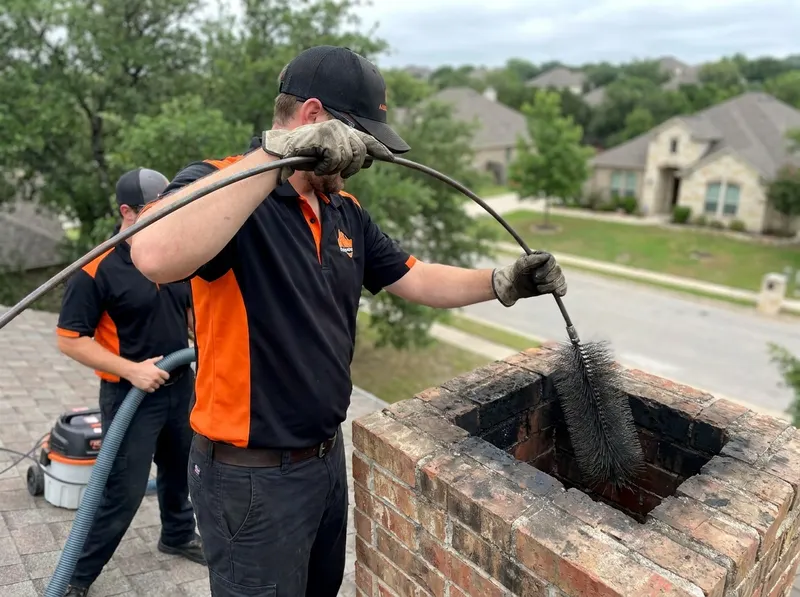
- Included: flue inspection, identification of creosote stage (first, second, or third degree), chemical treatment or rotary mechanical removal, and a re-check of the treated surface.
- How fast: most single-flue jobs are handled in one to three hours; heavily glazed flues sometimes need a follow-up visit after a chemical modifier has had time to break down the deposit.
- What it costs: ballpark $150 to $450 depending on buildup severity and flue height; third-degree glaze on tall flues runs higher, exact price confirmed on-site.
- What we take: loose creosote, soot, and debris are removed from your firebox and hauled out; no residue is left in the living space.
- How to book: call (512) 615-2035 for a free on-site assessment before any treatment begins.
Creosote forms in three stages, and the removal method depends entirely on which stage is on your flue wall. First-degree creosote is a light, sooty powder that a routine sweep clears. Second-degree is flaky and tar-like and usually responds to a stiff rotary brush. Third-degree buildup is the dangerous one: a hard, glossy, tar-glazed coating that has effectively become concentrated fuel bonded to the flue. Brushing alone will not remove third-degree creosote, so it is treated with a chemical modifier that dries and crystallizes the glaze so it can be broken loose, or removed with specialized rotary tools. Trying to burn through it is what starts flue fires.
Creosote builds faster on Austin chimneys used heavily during the short cold snaps between December and February, especially when fires burn low and slow or use unseasoned oak and cedar cut from local yards. Older masonry flues in Hyde Park, Clarksville, and Travis Heights tend to run cooler and accumulate creosote quicker than newer stainless-lined systems in Circle C Ranch and Mueller. In Tarrytown and Barton Hills, wood-burning fireplaces that sit idle most of the year and then get used hard over the holidays are common candidates for glazed buildup, because infrequent hot fires never fully cured the earlier deposits. Homes near the wooded slopes above Lady Bird Lake and toward Mount Bonnell often burn more, and their flues reflect it.
Use creosote removal — rather than a standard sweep — when an inspection finds shiny, hardened, or tar-like deposits, when you smell a strong smoky odor even with no fire lit, or when a previous sweep could not fully clear the flue. The trade-off is time and cost: third-degree removal takes longer and may need a return visit for the chemical treatment to work, but it restores safe draft and removes the highest chimney-fire risk. If your flue only shows light powdery soot, a routine sweep is the right call instead, and we will tell you that on-site rather than upsell a treatment you do not need.
📞 Call (512) 615-2035Creosote Removal & Third-Degree Buildup pricing in Austin
| First/second-degree creosote sweep | $150-$250 |
| Third-degree glazed buildup treatment | $250-$450 |
| Follow-up visit after chemical modifier | from $150 |
Exact price confirmed free on-site before any work.
Creosote Removal & Third-Degree Buildup — questions, answered
How do I know if my Austin chimney has third-degree creosote?
Third-degree creosote on an Austin chimney looks like a hard, shiny, black tar glaze on the flue wall, and it is confirmed by inspection. Signs include a strong smoky smell with no fire lit and a flue a previous brush could not clear. We identify the stage on-site before any treatment.
Can you brush creosote out of a Barton Hills or Tarrytown flue?
Brushing works for light and flaky creosote in Barton Hills and Tarrytown flues, but third-degree glazed buildup cannot be brushed off. Glazed deposits require a chemical modifier or specialized mechanical removal because the layer has hardened into the flue surface.
Why does creosote build up faster in some Austin homes?
Creosote builds up faster in Austin homes that burn low, slow fires or use unseasoned wood, and in older cooler masonry flues found across Hyde Park and Clarksville. Fireplaces used hard only during short winter cold snaps also accumulate glaze because fires rarely stay hot enough to prevent it.
How much does creosote removal cost in Austin?
Creosote removal in Austin is a ballpark $150 to $450, with third-degree glazed buildup on taller flues at the higher end. The minimum charge is $150, and the exact price is confirmed during a free on-site assessment based on buildup severity and flue height.
Is third-degree creosote in an Austin chimney a fire hazard?
Yes, third-degree creosote in an Austin chimney is the leading cause of chimney fires because the glazed layer is concentrated fuel bonded to the flue. Removing it before you burn again is the single most effective way to reduce that risk. Call (512) 615-2035 to schedule an inspection.